

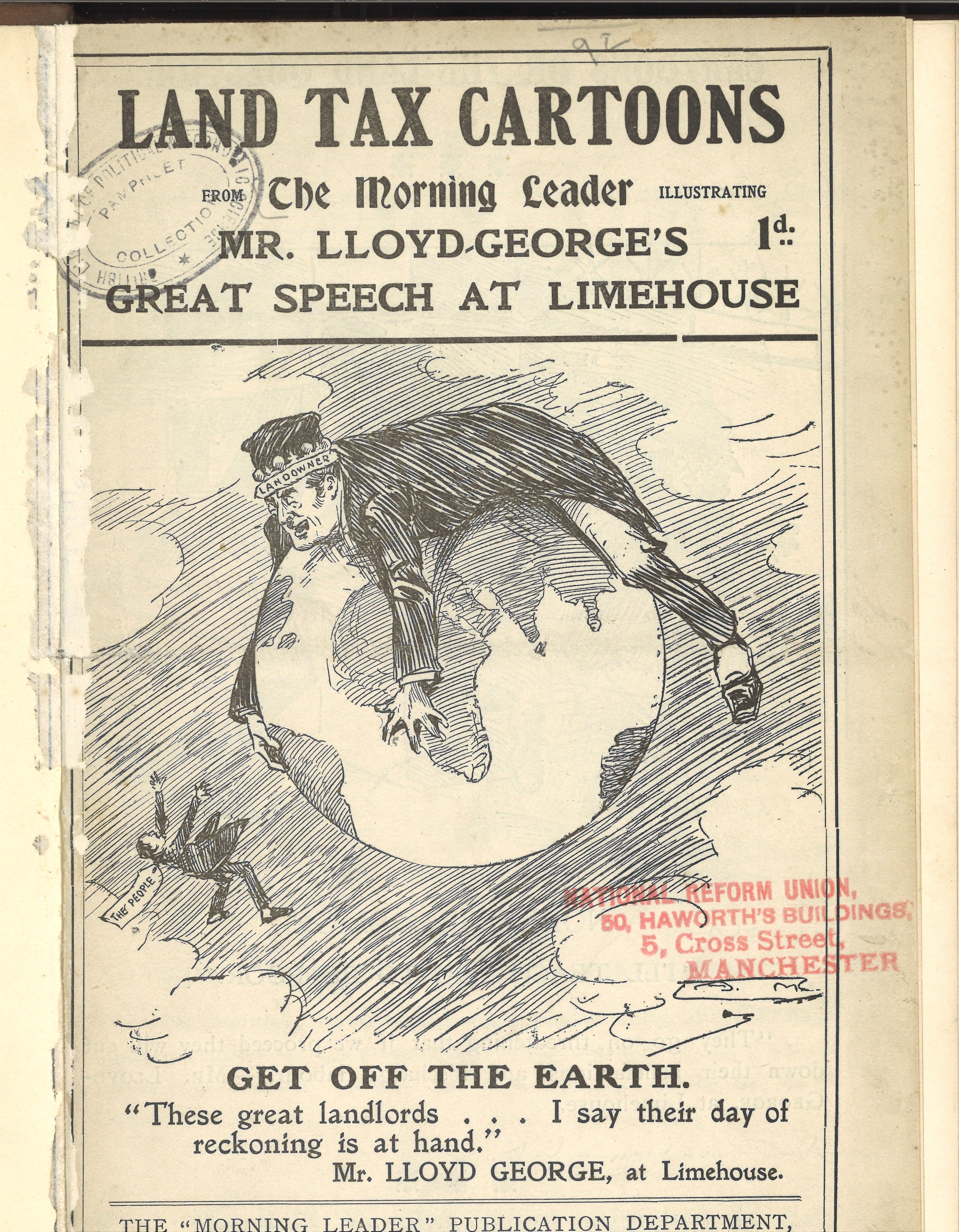
Great to see Samuel Watling’s article “The failure of the land value tax”.
Watling’s essay subtitle reads:
Land value taxes are once again becoming a popular all-purpose solution to housing issues.
But implementing them in early 1900s Britain destroyed the then-dominant Liberal Party.
The second sentence is a major revisionist claim, one that has substantial evidence to support it, and it is a shame that no attempt is made to prove it, for a completely different conclusion may have emerged.
The article focuses on a smaller case - that the Liberals, between 1906 and 1914, failed to implement a central part of their program. Watling makes two arguments - that the technical implementation of the legislation was botched, and that the whole idea of LVT was/is unworkable. Inevitably, the two arguments get tangled up.
The failure to permanently introduce the thin end of the LVT wedge into the government of the UK before 1914, and its immediate rollback after the war is less about the technical, administrative and conceptual issues, and more to do with the extraordinary campaign of opposition that was waged against it. Watling does allude to this, but assigns it no causal weight. This perspective shows that both sides took the idea of LVT very seriously.
An extended multi front war was waged to destroy the legislation. George Dangerfield, perhaps the most famous author of the period (The Strange Death of Liberal England) claimed the Tories wanted to destroy Liberalism itself. By 1914 some of them were murmuring that they preferred rule by the Kaiser to rule by the Liberals.
Events begin to connect and become understandable when attention is directed away from the Liberals to the Tory/Unionist/Monopolist opposition, the ‘die-hards’ and the ‘last-ditchers’. There was plenty of opposition within the Liberal party as well. They included the Liberal Imperialists.
This perspective even raises questions about the timing and meaning of the war.
Watling’s interesting account of the growth of the Georgist land movement within the Liberal Party shows how deep rooted it was. The role of the grassroots movement should not be ignored, it was nationwide, ran its own propaganda campaign, was independent of political parties, and pressured the Liberals onwards at every opportunity.
Quoting from the article:
Britain in the early 1900s became a case study in how administrative complexity can derail land value taxation.
Administrative complexity was certainly not the primary factor that derailed the legislation.
In brief, the Tories/Unionists/Lords/Monopolists:
mangled the Scottish Valuation Bill of 1908.
provoked a full on constitutional crisis to stop the 1909 budget’s land clauses.
for the same purpose, forced 2 elections in 1910 with the help of the King.
diverted parliament to enact historic and bitter House of Lords reform.
waged a press, political and legal campaign against land reform.
Embroiled the leader of the campaign in a contrived scandal.
in Ireland, started a proxy war against the government.
Only in late 1913 was a bruised and angry Lloyd George (Chancellor) able to resume legislative goals. But by 1914 the new land campaign struggled for resources amidst multiple crises - an anti-government armed build up in Ireland, radicalised domestic industrial unrest, and of course international brinksmanship.
However, the land campaign of 1914 was significantly more radical compared to 1909, and when LVT was put into the Budget that year, it did not go unnoticed.
Watling:
[Henry] George had promised his followers nothing short of Utopia.
Intercepting the entire social surplus with the land value tax, he argued, would provide not just all the money the government needed but enough to end poverty and create a harmonious society.
Liberal Georgists argued that full LVT was the root reform, without which all other reform would fail. This is the prism through which the legislation should be viewed. Lloyd George’s fiery speeches came direct from the deep convictions of the movement.
Watling:
As we have seen, George’s dedicated Liberal followers lobbied for decades to convince others in the party to implement the tax – and it worked. By the 1906 election, 68 percent of English Liberal candidates endorsed land reform.
The Liberals, now unified in their support of land value taxation, won the 1906 election. The Conservatives suffered their worst-ever electoral defeat (until 2024).
Chancellor David Lloyd George saw an opportunity to tax the Conservative voter base as much as possible in his 1909 budget …
Still, opponents of land value taxation abounded.
And in rejecting the 1909 Budget …
the Tory Lords had effectively violated the constitution of over 200 years
Why would a new scheme of taxation, based on unproven theories “refuted by economists” cause such a reaction? - a reaction the Lords knew could - and in 1911 did - lead to the removal of their veto power entirely?
Because LVT ultimately meant the economic dissolution of the landowning class. Henry George and others were clear on this, and in that period everyone read Henry George. Memories in the House of Lords certainly went back to George’s public quarrel with the Duke of Argyll. LVT meant the end of the ruling aristocracy: only through this live or die prism does the intensity of the opposition make sense.
Watling:
There were close to ten million properties in the country that needed valuing, and for the majority of these properties, the land and structure had been traded together, meaning that there was no distinct market valuation of land to draw from.
The process was beyond the capacity of the government. In August 1910, the Liberals sent out 10.5 million copies of the notorious ‘Form 4’
The government drew-up, printed and delivered 10.5 million forms within a year, in the face of unprecedented opposition. Form 4, it was argued, could have been much simpler, but according to contemporary reports in the monthly Land Values, it was being returned at a high rate, with a low number of disputes. Note: this was the first valuation since 1086, some called it the new Doomsday book.
The definition of land value was impossible to ascertain properly and became bogged down in court cases.
Landowners formed an organization known as the Land Union, which began a program of high-profile legal attrition – subjecting every ambiguity of the law to judicial review – to test the complex and hurriedly made legislation in the courts. The campaign was successful …
Watling does hint at the fanaticism and resources of the opposition. Many modes of resistance were used; lawfare was just one of them.
The land taxes did nothing to solve the critical issue of financing local governments.
By 1914, the failed valuation schemes had cost £2 million to implement, while the taxes had brought in only £500,000.
It is impossible to judge the Liberal’s LVT program by critiquing the legislation of 1909 - 1914, for this was legislating under fire. The level of resistance was too great for anything other than a cautious approach, where setback and delay would be expected. Some argued for much bolder legislation, but it is reasonable to expect that the government would be playing a longer game, seeking demonstrable public support, thus maybe even willing to rile the grassroots to heightened activism.
Both sides knew that the introduction of Single Tax principles into Government was revolutionary. 1909:
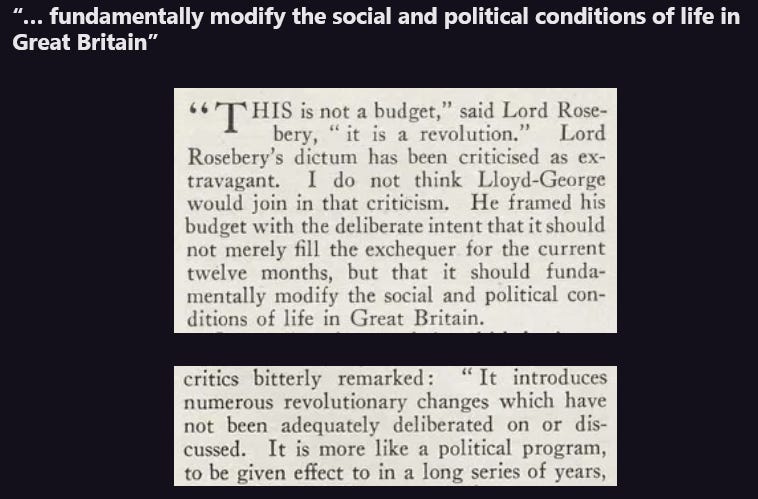
How hard to push the revolution was the constant question, especially by 1914, and understandibly so given the increasingly dangerous behaviour of the Monopolist opposition. 1914:
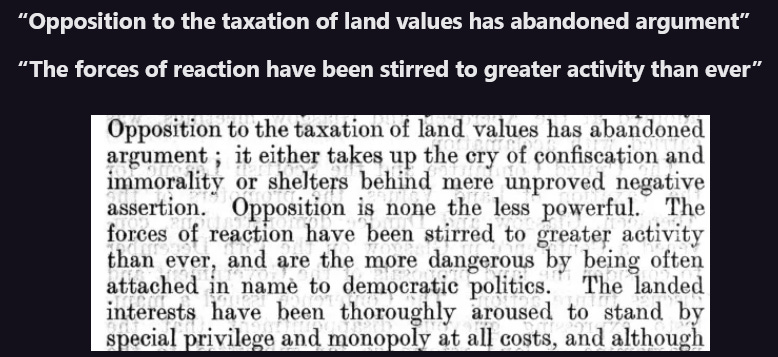
According to Lloyd George, the Valuation was largely complete, it had not failed. It threatened apocalyptic revelations: as Lloyd George said repeatedly throughout these years - it was the Valuation they really feared.
Watling:
Lloyd George finally made a public commitment to rating reform in February 1914, announcing that the local rates would move from a tax on property to a tax solely on land value paid to the local government.
As noted above there are many reasons why the legislative land campaign of 1909 could not be resumed until late 1913. By this time the campaign also signified a commitment to the direction of peace which lies at the heart of Single Tax philosophy. Read about that here and here.
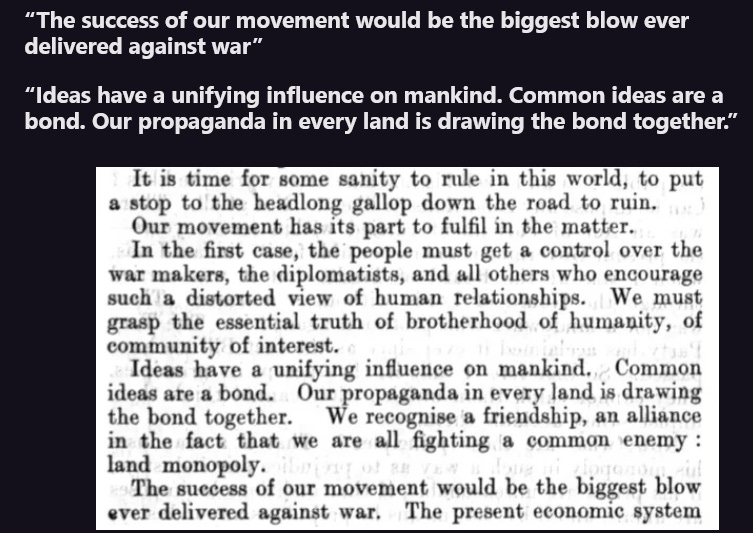
(All snips are from the contemporary newspaper Land Values)
Watling:
But ultimately whether they [land value taxes] were theoretically right was irrelevant. The program was impossible to implement quickly: the Valuation Office predicted that it would take until 1917 to finish the valuation at the earliest.
Lloyd George had difficulties with the Budget of 1914 - but everything was difficult by the spring of 1914. The country was on the verge of civil war in Ireland.
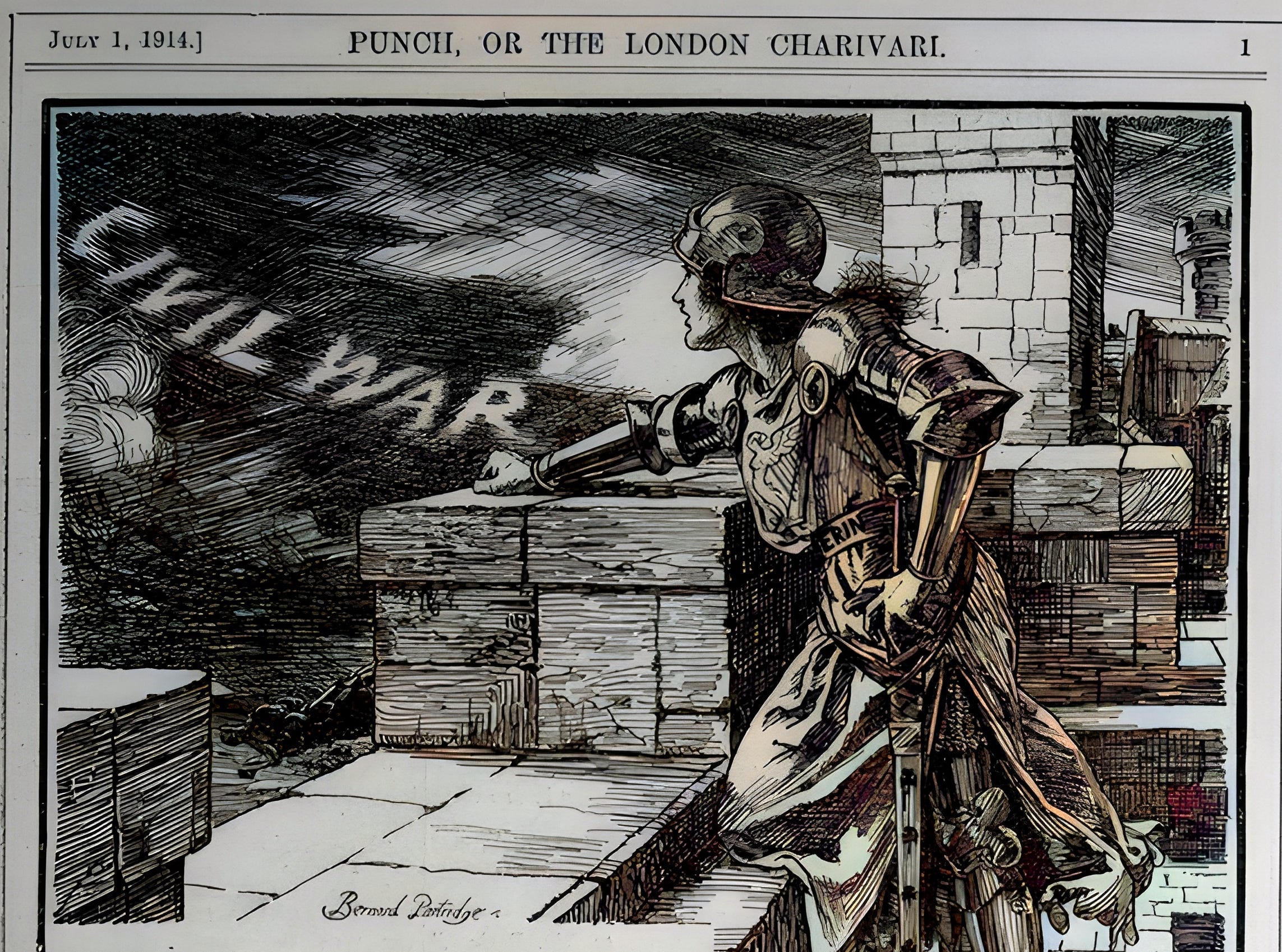
Notlong before the war’s outbreak, Lloyd George made the decision to talk publicly about using government control of finance to curb warmongering. The Valuation, he said, was due for completion in 1915, in time for the General election which he planned to fight on the central issue of Land.
What could stop this final showdown?
In the end, the outbreak of the First World War put the final nail in the land value tax coffin.
Yes it did - and the dreadful question is to what extent that war was meant to drive in that nail.
Read the series The Single Tax v World War One. Start with Part 1 or with the Postscript here.
The series will soon be returning, to cover the period 1906 to the run up to the Budget of 1909.
Thanks to Samuel Watling for writing his essay and to Max Clark for bringing it to my attention.